
Map of Elsaar - Leonardo Garza
Origins
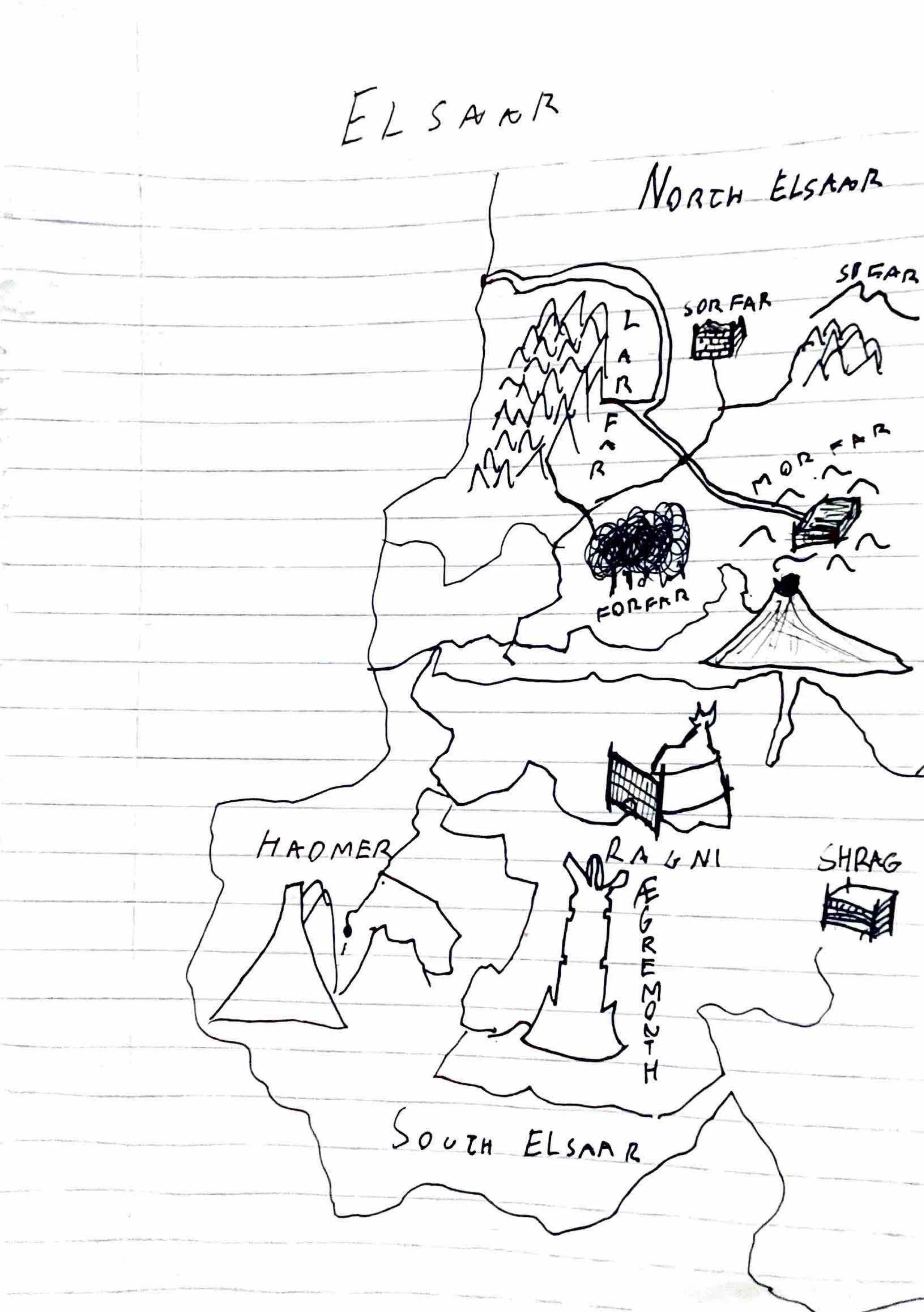
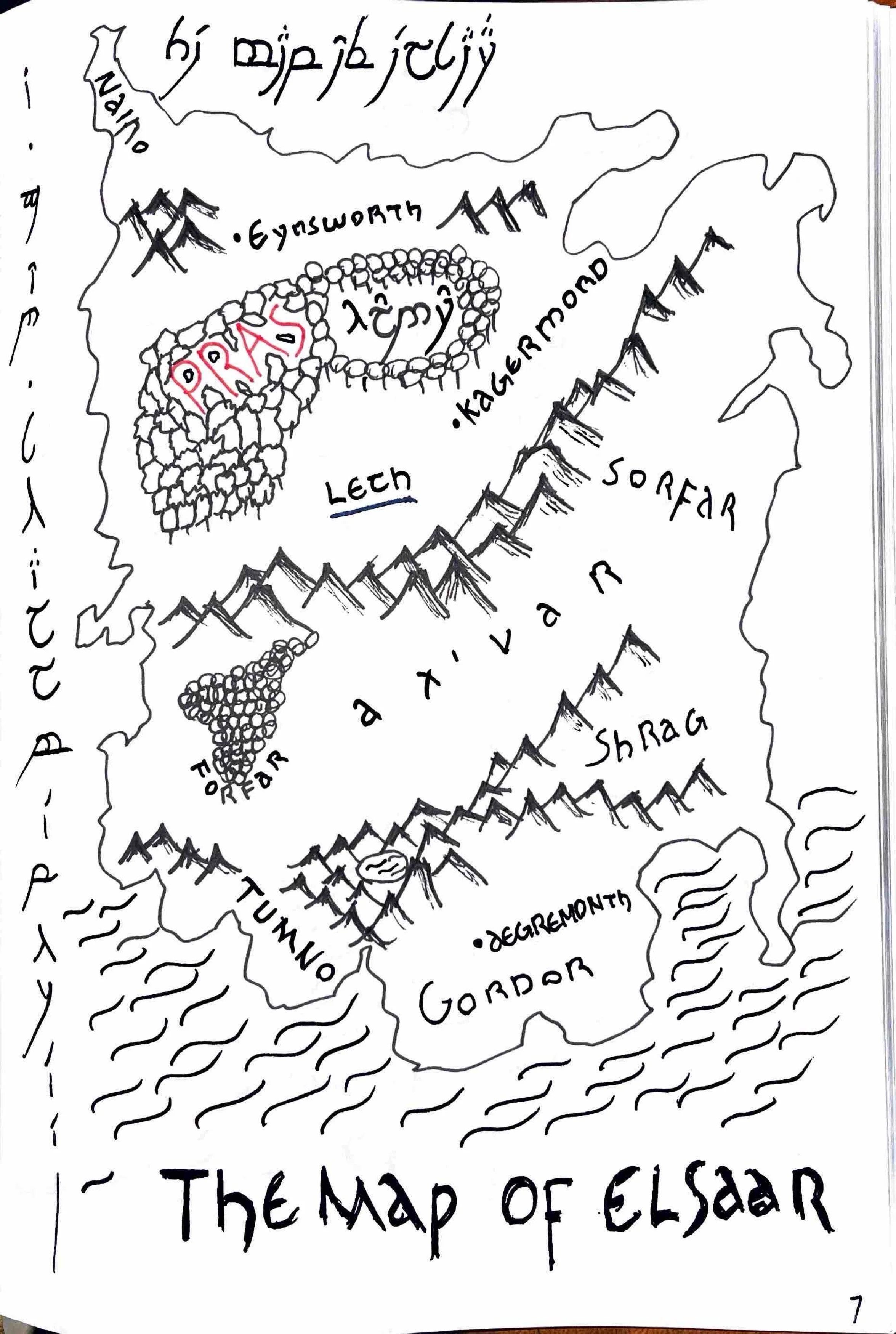
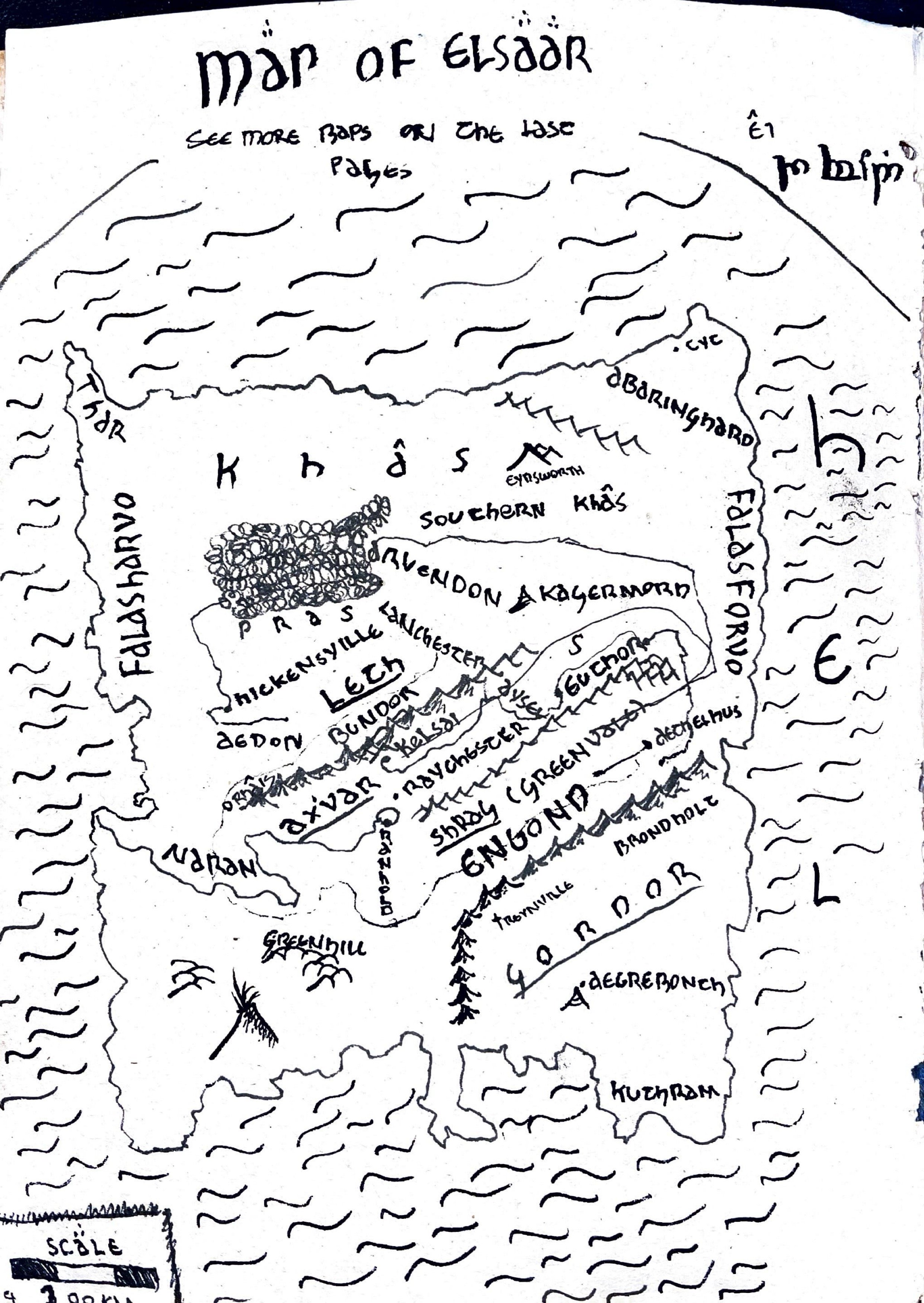
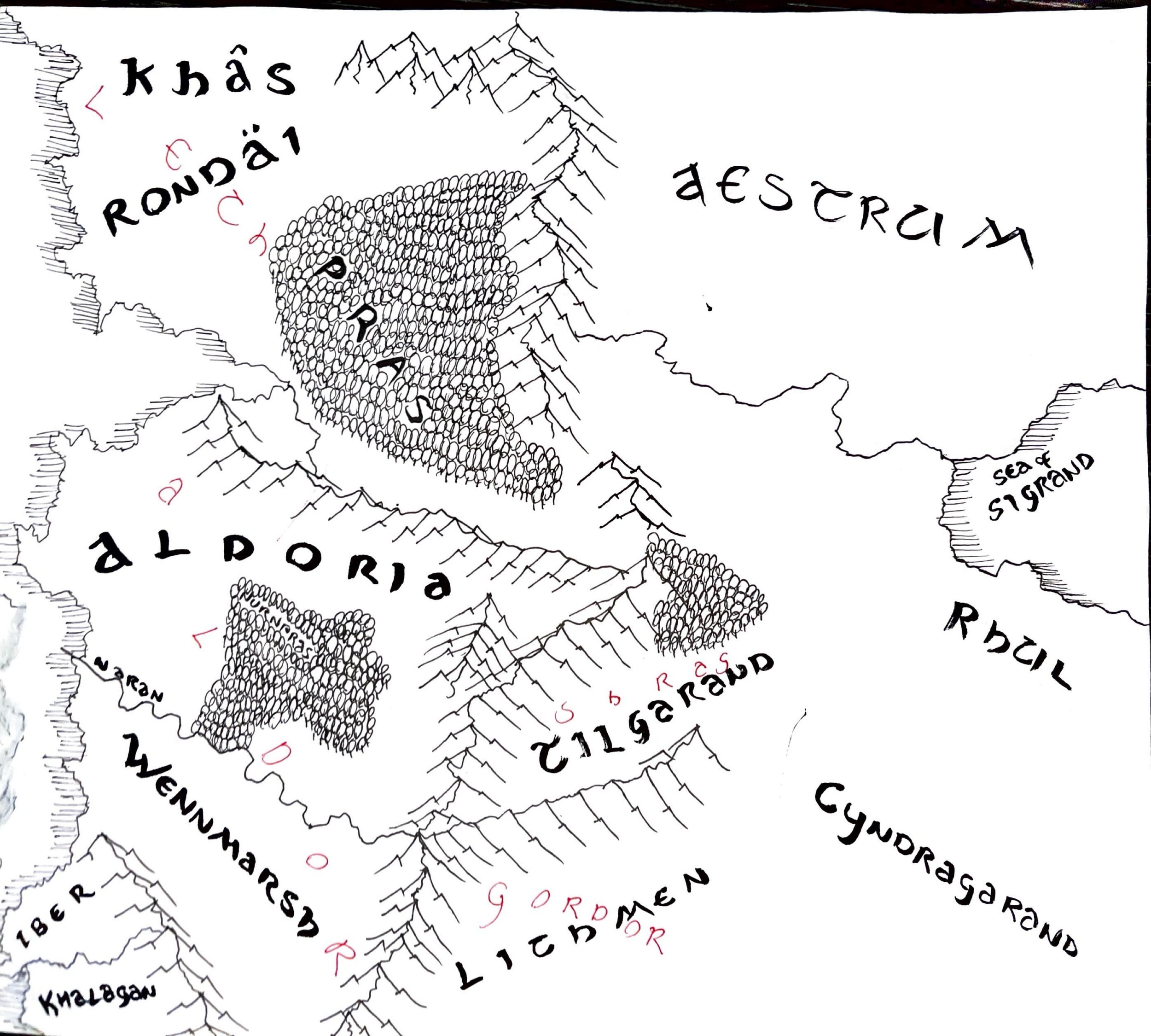
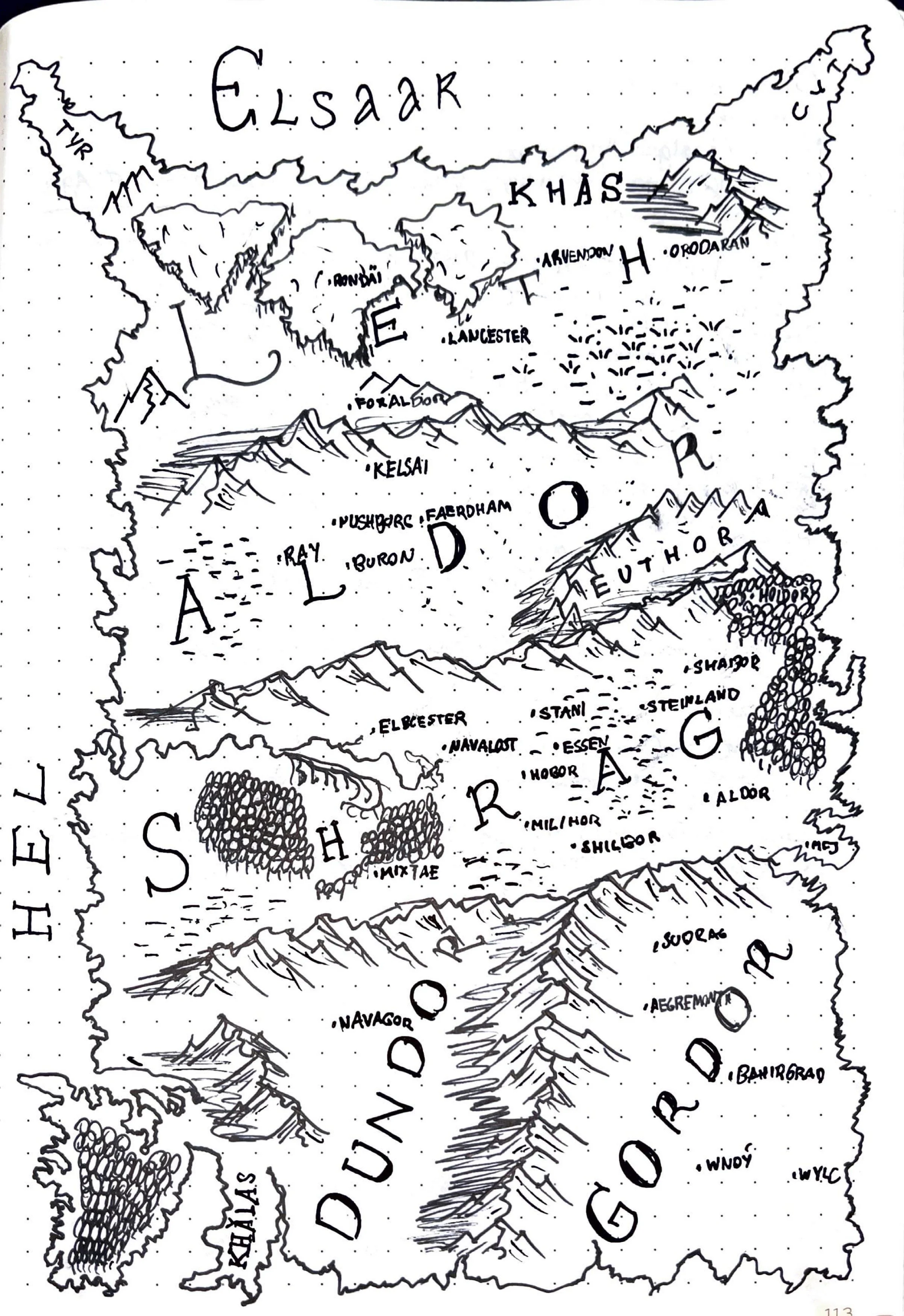
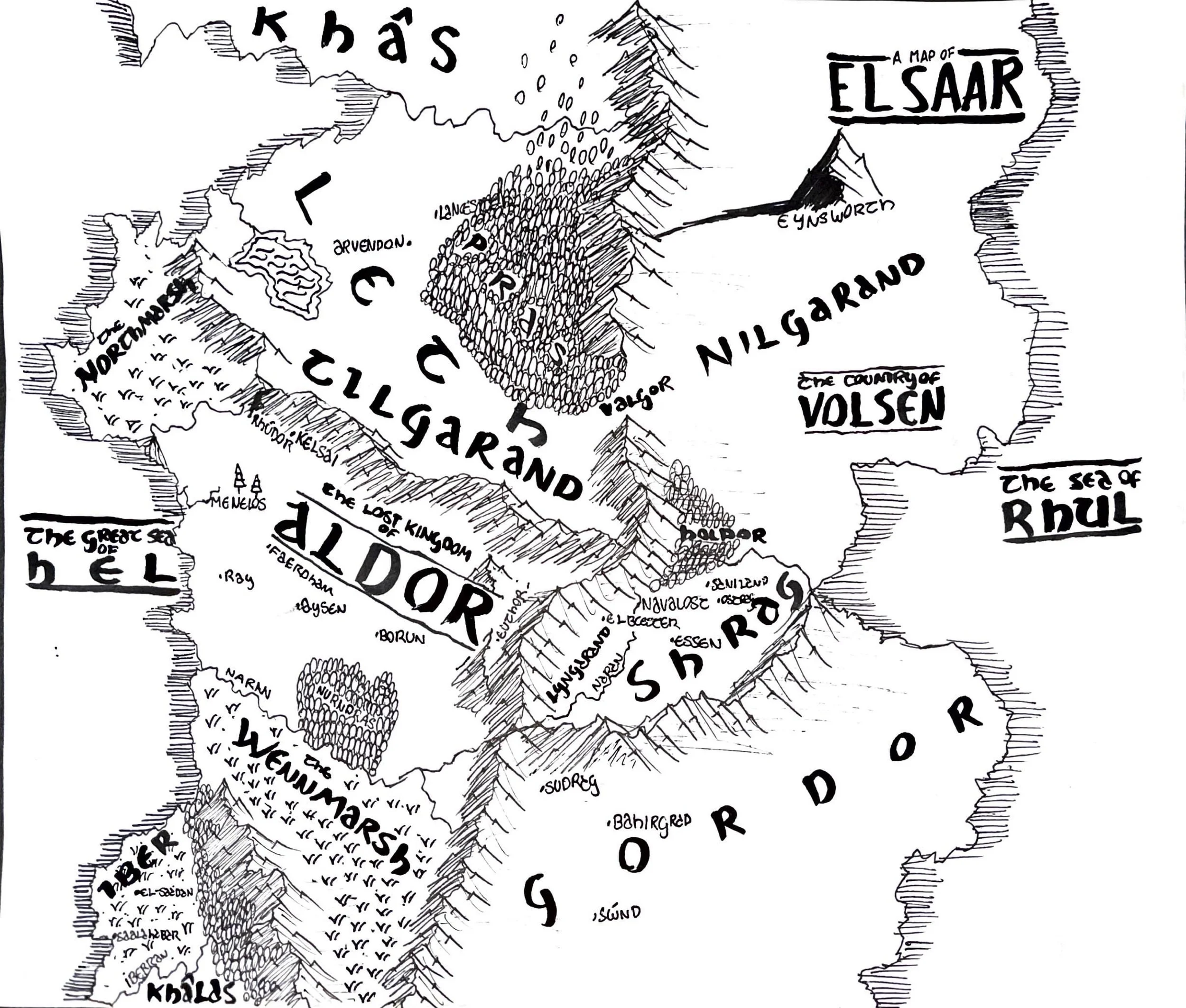
Mapping has always been that scapegoat for me as a teenager. Other than messing around with friends, drawing tiny maps in my school notebooks was my favorite way to pass the time, wiggling my fingers across the page, pretending to make frontiers and coastlines, just like the real world. Seeing the opportunity to develop my artistic skills, fourteen-year-old me decided to transform one of these maps, the one I titled Elsaar on a warm summer afternoon, into a story. Like any story written by a young man like the one I was, it was terrible at first. The Lost Kingdom, as it was — and still is called, would not be stopped in its footsteps. I was determined to finish it. Five years later, I haven’t finished it, yet the world I have set it across has a history I’m more than glad to tell the world about, for the lack of organization has made it personally impossible to even comprehend one percent of it. To quote my book’s foreword: “I am quite a disorganized man. And quite saddened by it. Sometimes I wish I hadn’t taken as long to write it, and for me to have been focused in a mighty totality against all odds. But the past is unchangeable. The future isn’t. Therefore if, for some reason, you, the reader, have gotten yourself the time to sit down and enjoy my books, as well as to read the very author’s words in reflection to his own reality, such as these, then it can only mean that my duty has been fulfilled, and that nothing came against it among the many struggles in life.” That. That is my personal pleasure: I haven’t finished it all, yet I have finished enough.
The world
Elsaar is a second home to me. Every time I write about it, about someone who lives there, about anything that happens inside its bounds, I feel like I can journey my soul into that place. Few have been the times I have dreamt inside of it, but those occasions are all the more impressive to my soul.
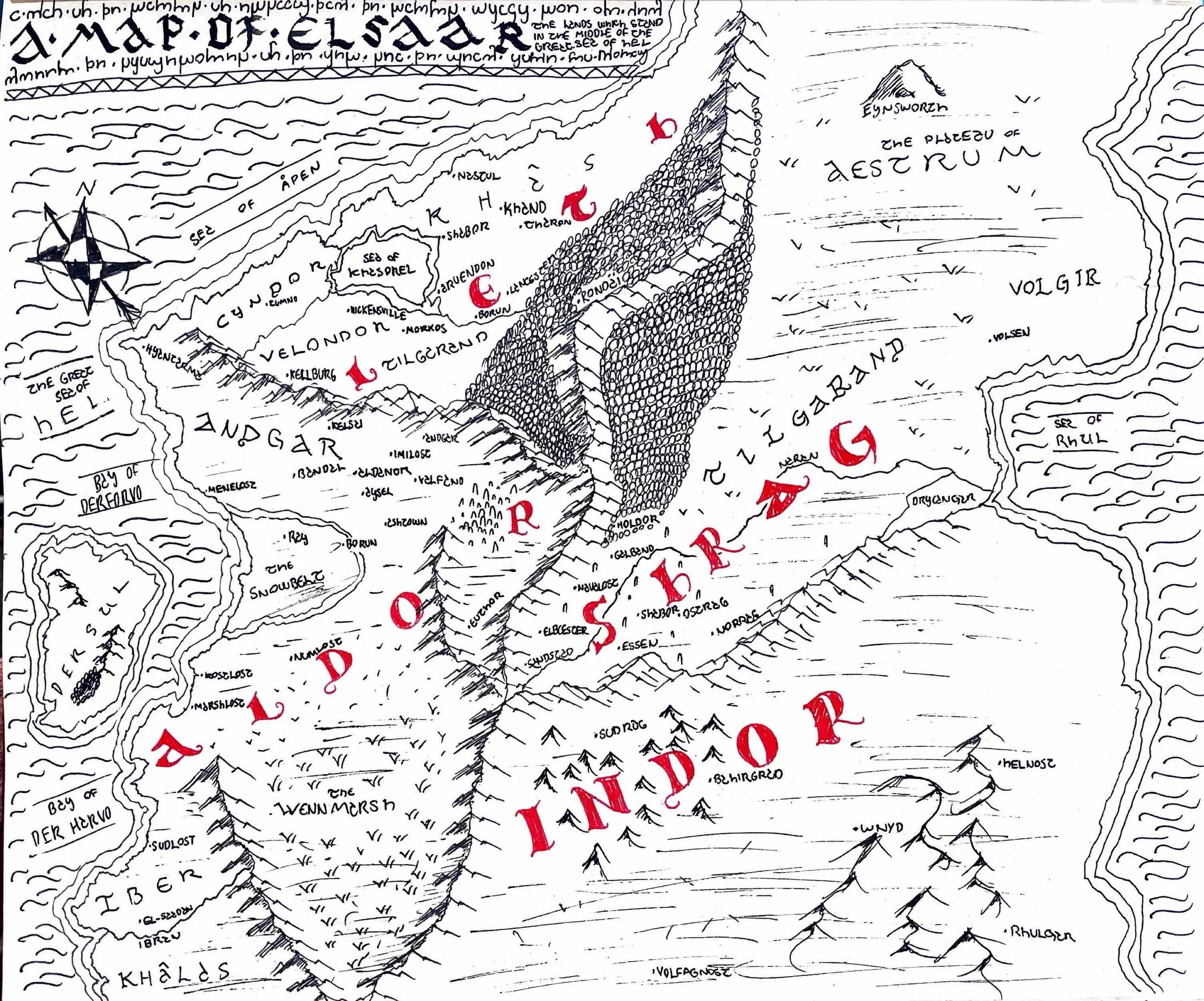
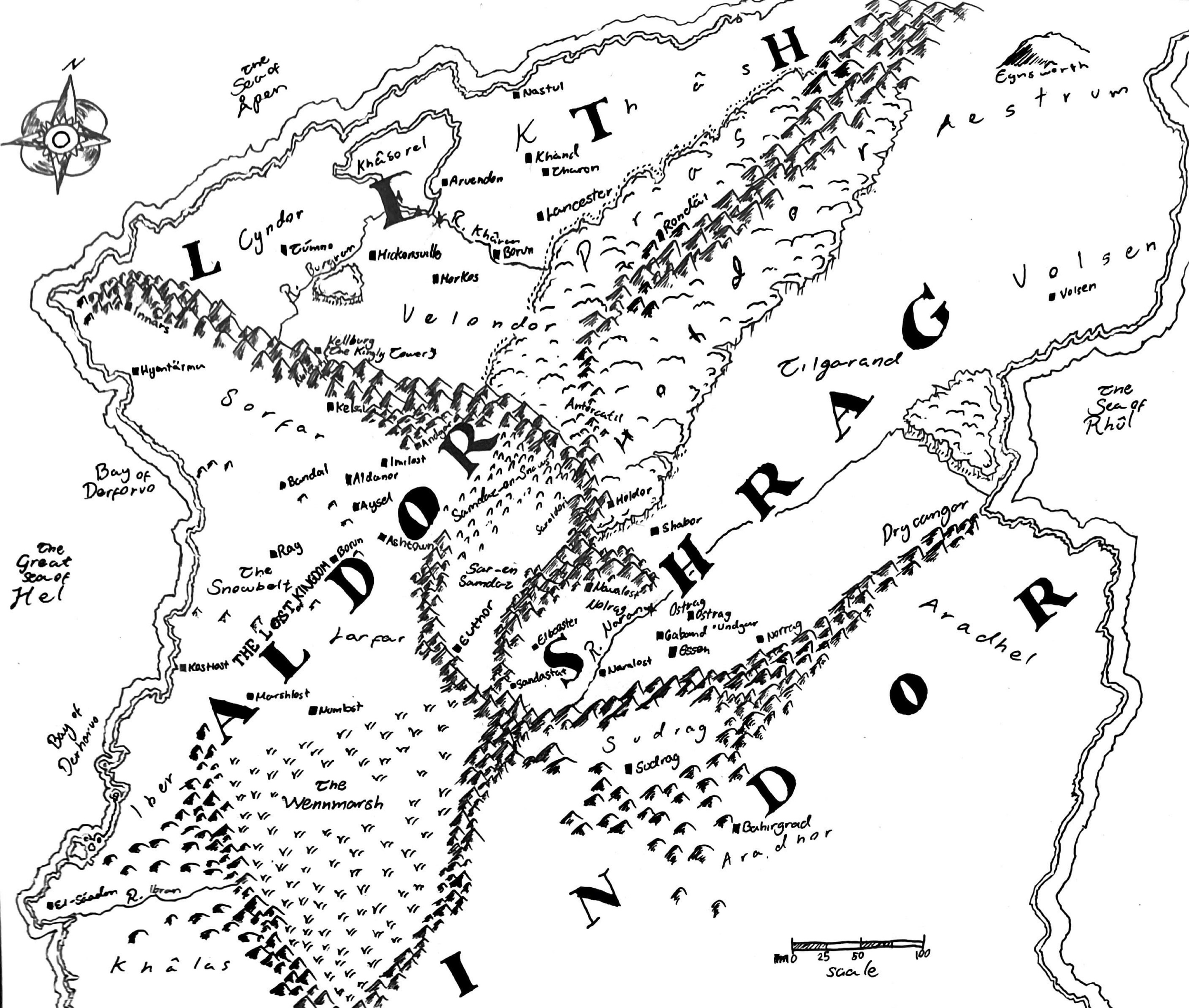
Elsaar’s name has an etymology comprised in its own fashion, its own worldbuilding, its own linguistics. The name is a conjunction of the root words hel (meaning “dark”, or in this case, “the Hel Sea”) and sâar (meaning “landmass”, “continent”).
The following fragment of text comes from the prologue of The Lost Kingdom. It explains the peoples and landmasses that reside inside the continent of Elsaar.
“The Aldorians were the first ones to fade away by fault of the Velondëmin. Ever since the beginning of time, the lands to the southwest of the Ondorë Calagan had been stereotyped as snowy and mystic. For this reason, the Kingdom of Aldor was always nicknamed ‘the Snow Kingdom’, a name that is even utilized during this very book. This, however, was only justified to the Wenngar, although it’s true that in winter times, there’s always enough snow discharge for the Aldorians to have formed a culture around living in the snow. During the mid-to-late reign of King Andos, the Aldorians, especially those living in the city of Andgar, were the first to design tapestries and long-tailed clothing, such as leather robes and tunics. For commerce with the Khâsians during the early days of Aldor, they created and mined the Nolcatil, the Western Mountain Pass. There were (and are) a lot of cultural differences around the landscapes, yet just to mention a few, the Larfarians, the Innarians, the Wenngarians, the Marshians, and the Euthorians are the regions that are mostly characterized by being the habitats of runen. It’s in the region of Sorfar, the plains in which Andgar and Kelsai stand, that most kellen live. This group of kellen is mostly comprised of the royal family of the Kingdom of Aldor, who, during this tale, is composed by King Nothelm II Cyning, as well as his mother, his aunt, and many distant relatives, who mixed through the ages with the runen, becoming counts and lords of many towns and communities, the latter which became a forgotten practice after the Skandorian invasion of Indor near the ninth century of the Third Age.
The Indorians, those belonging to the regions of Sudrag, Indor, Aradhor, and Aradhel, are mostly characterized by having lived through the most hardships among all other people around the continent of Elsaar. Although it is true that, throughout the years, they have developed a rich culture, full of great music, food, folklore, and tapestry, they have also been known to have been the most culturally affected — the first record in which in men’s history they’re mentioned, is through an evangelization that Alessandro, the second son of King Sander, lord of the ancient Kingdom of Nolrag, conducted on the prehistoric people that resided on its deserts. It’s also wise to mention that before the great Second Dunsdaar (664 II – 683 II), the aforementioned kingdom was not mentioned as Indor, but as Arador, meaning ‘the sand kingdom’ in the ancient Khâsian tongue, due to the vast deserts that were found in the midlands of the present country. This has also given the names of the regions of Aradhor (the Empty Desert), as well as Aradhel (the Dark Desert). Against their best efforts for autonomy, most of the artistic culture that surrounded the history of Indor was replaced by the Skandorian variants during the Khardagalónd (the Dark Days’ War, 801 – 851 III). The Indorian culture, although vast, large, filled with many godly beliefs and traditions, is mostly reserved for museums and tourist parks at the time of this book.
A hundred leagues to the north of the Indorian capital, the Shragians had settled long before the desert people did. Since there’s historical reckoning, there has been an economically rich region, as well as a culturally rich counterpart, of what comprises the country of Shrag during the time that the present book is being developed. The aforementioned region that reeks of wealth and richness is that of the field of Navangar, therein which the city of Navalost lies, the main literary and scientific center of Elsaar, for it’s also here that most lawful principles were developed, such as the Pâinorkros (the Book of Painor, 276 II), which first introduced the concepts of constitutional rights, jurisprudence, work laws, freedom of speech, as well as gave constitutional equality for women and ex-slaves, as well as prohibited slavery inside the Green Kingdom’s frontiers. The Shragians are some of the greatest and deepest in the cultural aspect, for the Drycanian folk of the far east was among the first to develop a culture which did not necessarily involve religion to their center.
The Khâsians, those who live in the elven realm of Leth — although their country has not prevailed ever since the Great Migration of 594 II, which was lead by Prince Helador of the ancient Kingdom of Khâs, to escape to northern, unknown lands, now known as Skandor, and free his people from the tyrannic iron hand of King Khândson, — were some of the first men in the entire continent of Elsaar to generate an entire set of beliefs that were centered in the faith to a singular figure, which had been often criticized by the elves who lived about thirty two leagues southeast from the Khâsian capital. This religion, which will be further developed across the length of this prologue, had been a tremendous part in the relating of elvish cultural values, such as those of the Alkon celebration, as well as traditional choral singing in service of worship to those professing said religion, to add melancholy, depression, and a perception of eternal fault to those who had not yet repented their ill actions against a higher servant of the Lord, a practice that had been common ever since the days of the Velondëmin.
(It’s important to note that the Khâsians are the sole ascendants of the Skandorian people, who, although extremely relevant to the development and political course of the Third Age, did not necessarily originate in the continent of Elsaar, and are thus not necessary for discussion in the greater spectrum of the racial differences between those inhabiting the present landscape).”
It took me over three years to make this. It’s far from finished.
A Reflection
Have I ever made a monetary profit out of making maps? Never.
Do I regret that part of my career as an artist is made up of making maps? Absolutely not.
I love making maps, and I always will. If I can make a better map than the last one, I will. That’s the purpose of this collection of pictures. If you’re a struggling artist, like me, who sometimes thinks that the thing they're doing will be the absolute last, and when they look back at it, they regret it, it’s important to look back and see what you did right and what you could do better. For that reason, this collection of maps is not just one, but eight. Each one of them makes me proud, and I bet fourteen-year-old me would be quite glad with my progress. I do everything for him, and your only reason to continue should be to please your younger self, too.
Thank you.
